5 ways to encourage empathy in young readers
Stories for connection and change. Guest blog written by Imogen Bond, Managing Director at Empathy Lab, an organisation that works with schools and families to help children build empathy through books.
Mental Health Awareness Week: action, for yourself, for someone else, for all of us.
A volunteer sitting with a child, a book open between them. Or a teacher reading aloud to their class. It doesn’t look dramatic. But what happens in that shared space, when the right story meets the right conversation, can be genuinely powerful.
Reading volunteers and teachers do something remarkable every day. In my work, I help by sharing practical tools, drawn from ten years of research and practice, to help make those reading moments even richer.
One thing is clear. Empathy is not something children either have or do not have. It is a skill that can be learned. And importantly, empathy and reading ability grow together.
Empathy Lab hosted a webinar exclusively for Bookmark reading volunteers, where we explored strategies for encouraging empathy in young readers. Here’s what we learnt:
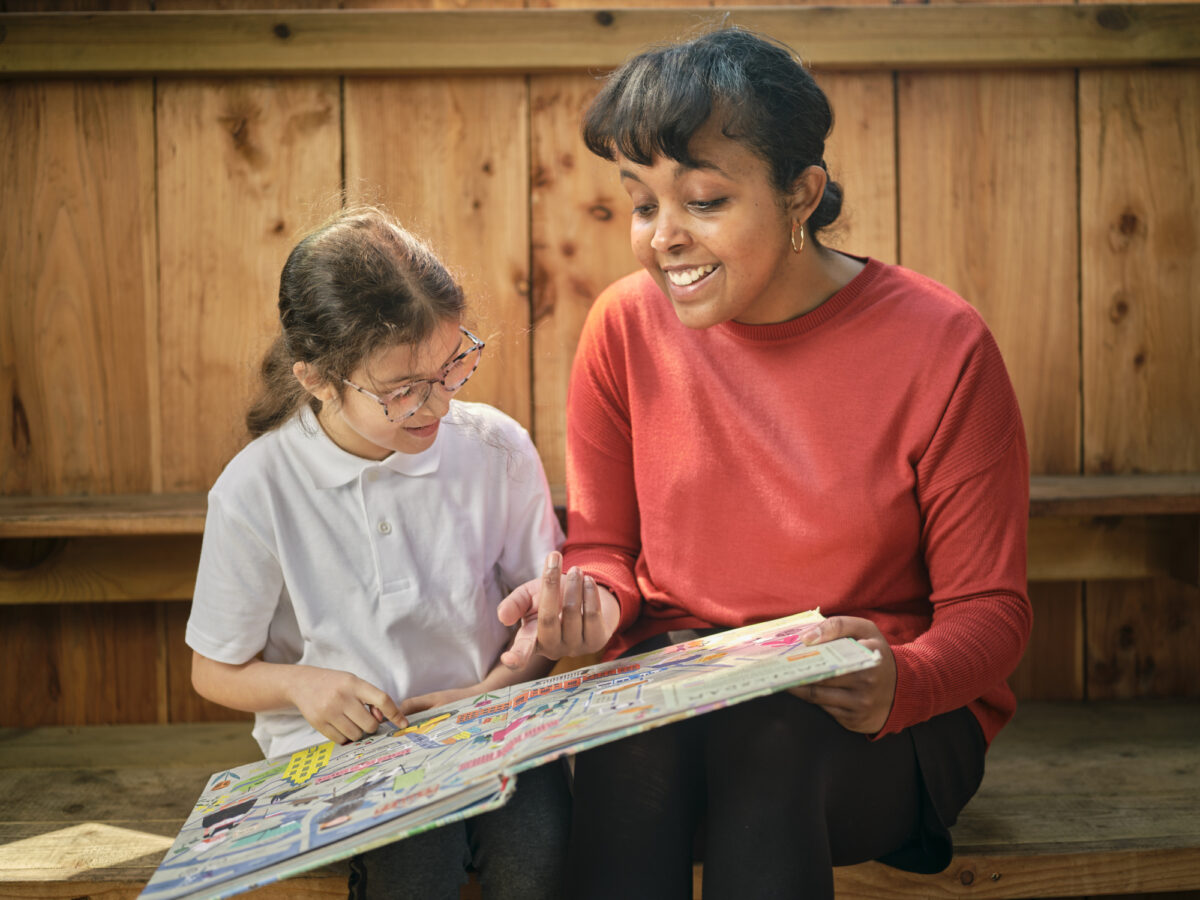
1. Understand that empathy grows alongside reading
Research helps us understand why reading can be such a powerful way to build empathy. The Reading Feelings project, led by the Sussex University Psychology team, was the first longitudinal study with UK primary schools to explore this link. It found not only that reading develops empathy, but that empathy in turn builds stronger readers.
A positive cycle starts to form when stories are shared with empathy in mind:
“Children who better understand others’ feelings and emotions become stronger more motivated readers”.
2. Recognise the three parts of empathy
To encourage empathy through reading, it helps to understand what empathy involves. We do not often stop to break it down, but empathy has three key parts:
• Affective empathy: feeling alongside a character and a story moves us
• Cognitive empathy: imagining life from another point of view
• Pro-social concern: wanting to help or respond
All three can be supported through shared reading. This means seeing reading not only as a way to build literacy skills, but as a way to help children understand themselves and other people.
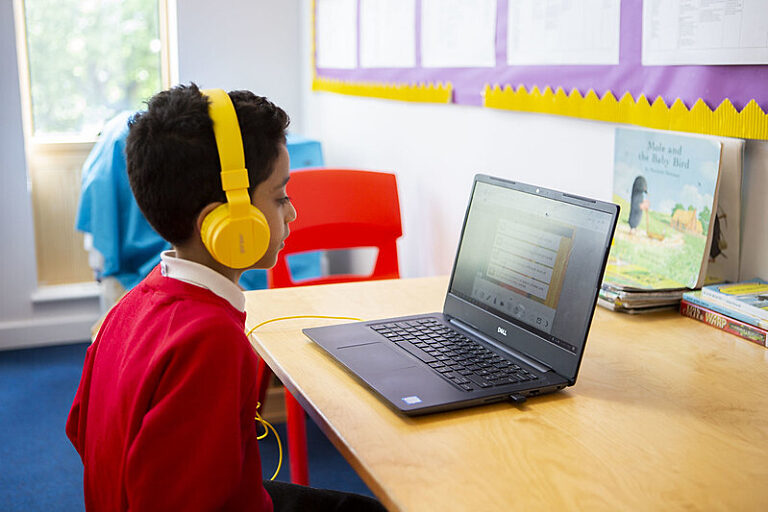
3. Shift the focus to the character, not the child
One simple but effective approach is called “empathy-focused booktalk”. It involves a small shift in how adults talk about stories with children.
Instead of focusing on the child or the author, the focus stays on the characters.
Rather than asking, “How would you feel?”, we ask, “I wonder how this character feels?” Then we explore that question together.
This shared discussion helps build a fuller picture of the character. Children and adults share ideas, listen to different perspectives and sit with the complexity of being human. The story becomes a safe space, where difficult emotions can be explored without putting pressure on the child to talk about their own experiences.
One attendee described this shift as reassuring. They had often worried about “triggering something” and had held back from emotional conversations. Learning that the story itself can offer a kind of protection, and that talking about a character’s feelings can help children make sense of their own, felt like a helpful and practical takeaway.
4. Give children language for feelings
Practical tools can also support empathy during reading sessions. One example is the emotions wheel. This helps children build a wider vocabulary for feelings.
When children can name emotions more precisely than just “sad” or “fine”, they start to understand themselves better. They are more able to explain how they feel and to recognise emotions in others. This supports wellbeing and helps children build stronger relationships.
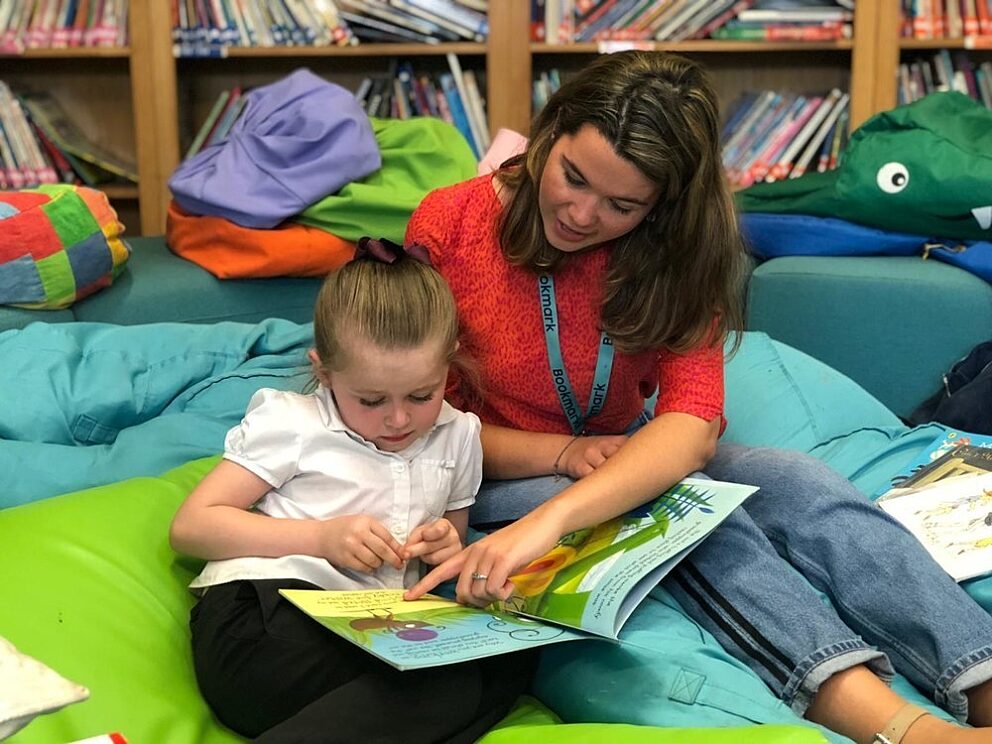
5. Choose books with depth, diversity and care
The books children read matter. At Bookmark Reading Charity, we choose books with diverse characters and experiences for our reading programmes. Alongside this, Empathy Lab has created a Read for Empathy Collection.
These books are carefully chosen for their authentic characters. They offer children windows into other lives and mirrors that reflect their own experiences.
We shared a story called April’s Garden to show how empathy-focused booktalk works in practice. Experiencing this kind of conversation as a reader helps adults understand how it feels before trying it with children.
Small actions, lasting impact
By the end of the session, every attendee said they felt confident using these ideas in their reading sessions. One person had already shared what they learned with others.
Change often starts this way. One adult trying something new. One reading session at a time. One child slowly finding words for how they feel.
This is what action can look like during Mental Health Awareness Week. Not a single grand gesture, but steady, human presence. A volunteer showing up. A teacher and a child wondering together about a character’s feelings. A story shared and enjoyed.
Over time, children learn that their feelings matter. They learn that adults are interested in how they see the world. And they learn that stories can help make sense of what is happening around them.
At Bookmark Reading Charity, we work with schools, families, libraries and partners like Empathy Lab because supporting children works best when people work together. If you would like to learn more, you can explore free Read for Empathy guides, the upcoming Empathy Day Festival and training for anyone living or working with children at empathylab.uk.
The most important action any of us can take to support mental health, for ourselves and for the children in our lives, might simply begin with opening a book together.

Make your story count
Become a reading volunteer with as little as an hour a week and change a child’s story – and your own.


