Tackling the UK Literacy Gap: Mind the Gap Campaign
How our national campaign raised awareness of the UK literacy gap and encouraged action to support children’s reading.
The UK literacy gap describes the difference in reading attainment between disadvantaged children and their peers, and it continues to affect thousands of children throughout their life by limiting their confidence, academic success and future opportunities.
Mind the Gap was our UK-wide literacy campaign, aiming to make this journey visible, showing how early reading support can help tackle it.
Here’s a look back at what we achieved – and why closing the literacy gap matters more than ever.
What we did to raise awareness of the UK literacy gap
We launched the campaign with a powerful panel event exploring the findings of our first impact survey. Across social media, we invited our audience to travel through a series of six “life stations” – each revealing a moment where the literacy gap widens, and the people who are working to close it.
1.Early years and the literacy gap
We began our journey in the early years, where so many children start school already behind. Parents and early years creators like Mrs Brown’s Book Box shared simple, joyful ways to build reading habits into everyday home life, showing families that small moments can make a big difference.
2. Primary school and reading attainment
In the primary years, we highlighted how reading underpins every subject – and how one in four children in England leave primary school unable to read well (1). Authors such as Rob Biddulph helped us show why reading for pleasure matters so much at this stage, fueling curiosity and confidence that helps to support a lifelong love of reading.
Stories from teachers and volunteers reminded us that targeted support during the primary years, can change a child’s trajectory.

3. Secondary school and the widening literacy gap
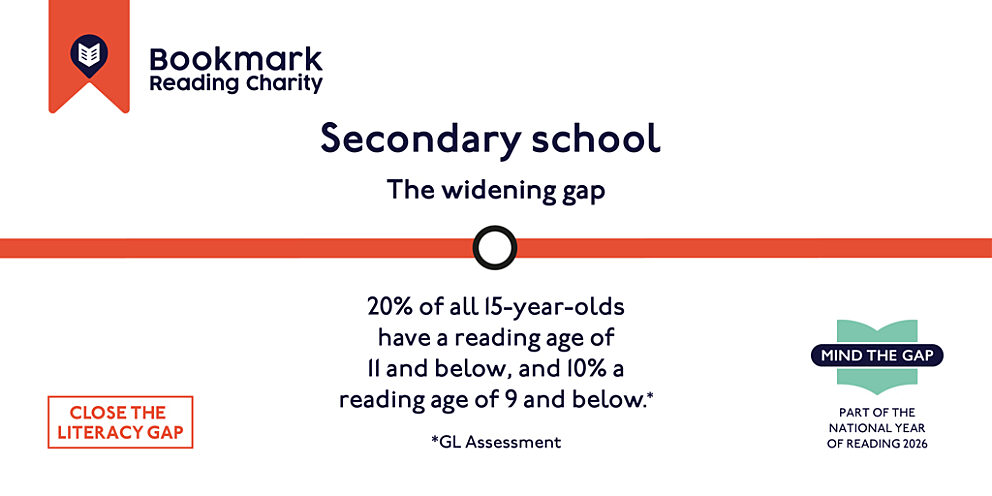
As we moved into the secondary years, the gap becomes even more stark – 20% of 15-year-olds read at the level of an 11-year-old (2).
The importance of reading in the teenage years
As part of our Mind the Gap campaign, discover the impact of reading in the teenage years – and the importance of encouraging it.
Read moreAuthor Janeen Hayat explains that “the gap between children from low income households and others is still really wide, that gap is an average of five months when children start primary school and it can grow to over 19 months when they leave secondary school.” (3)
She stresses that “literacy is absolutely key to closing that gap”, shaping qualifications, employability and future opportunities. Hear more from Janeen here.
4. Literacy and the transition to work and higher education
When we explored the transition into work and higher education, the challenges became unmistakably clear: reading is essential for everyday tasks – from completing job and university applications to navigating workplace communication. Yet, 6.6 million adults in England still struggle with reading (4).
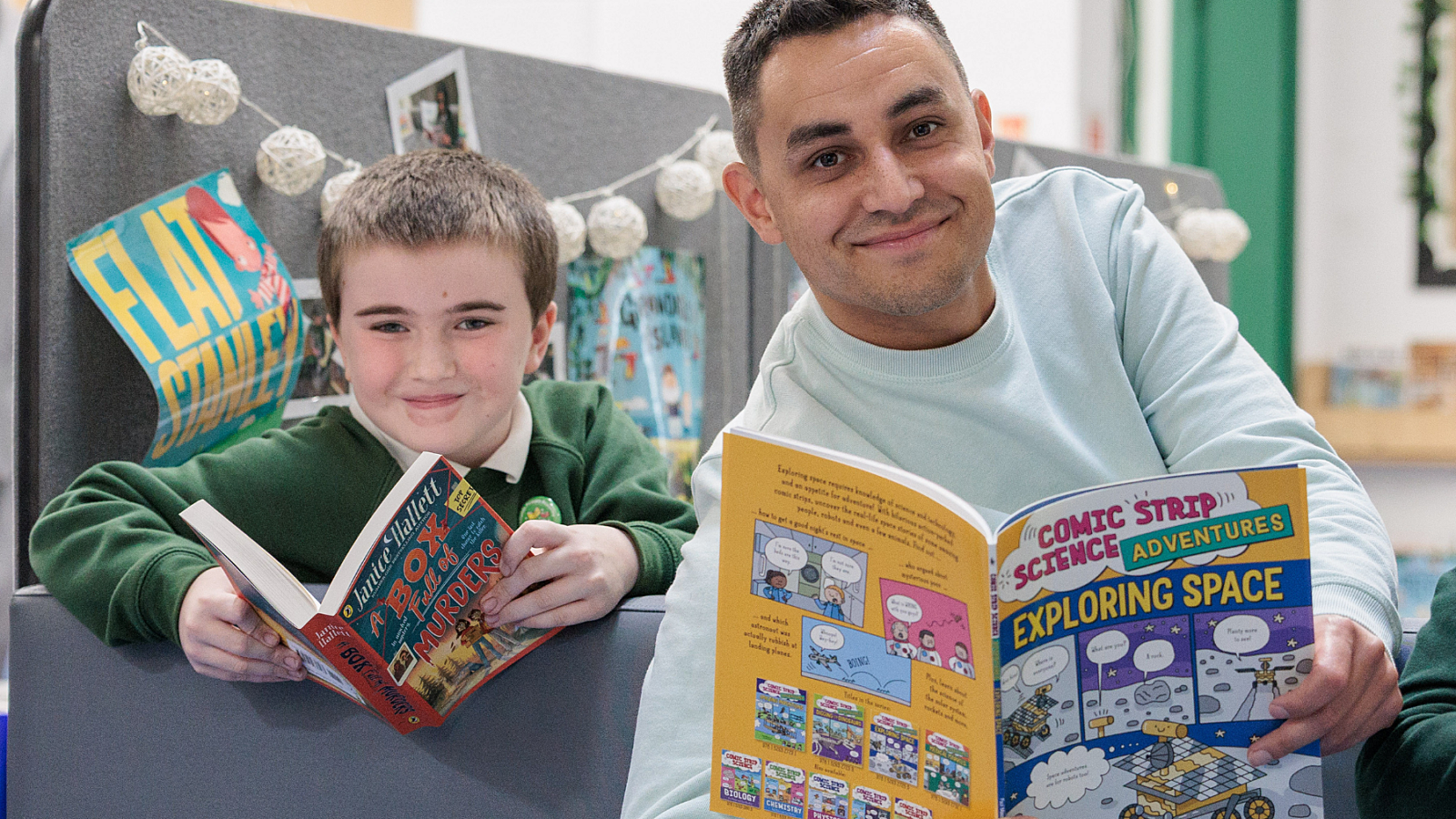
CBBC Presenter, Ben Cajee shared how reading has supported his own career journey, reinforcing that literacy shapes opportunity long after school ends and remains a vital skill for young people entering the world of work.
5. How literacy impacts employment and earnings
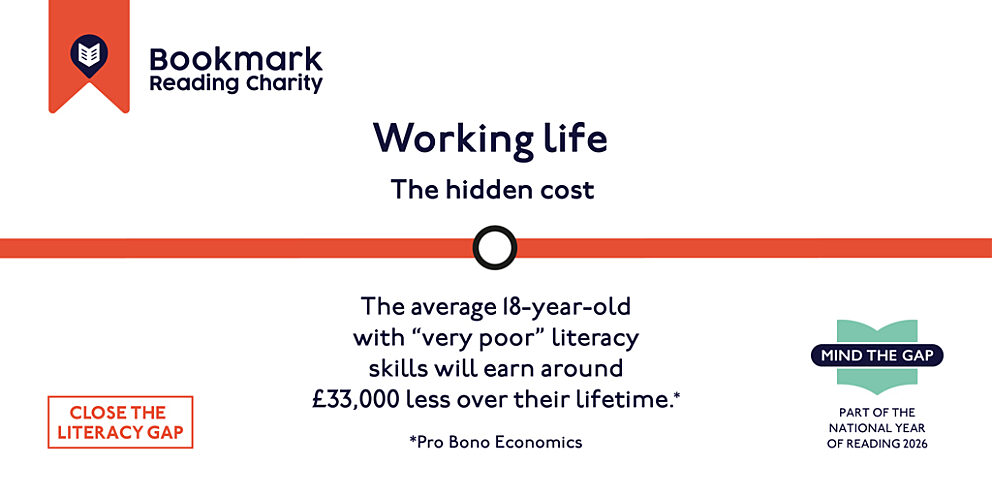
Working life brought another layer to the story. We explored how lower literacy links to fewer job options, lower pay and limited progression – with those who struggle with reading earning, on average, £33,000 less over their lifetime (5).
Volunteers and authors helped us show what that means in real, everyday terms, with Kavin from PwC sharing how literacy is a “gateway skill that helps the next generation to be successful”.
6. How literacy affects health and life outcomes
Our final “station” focused on health, life expectancy and the impact on the next generation. We explored how poor literacy can impact someone’s ability to read prescriptions, appointment letters or seek health advice, and how this affects long-term wellbeing and life expectancy.
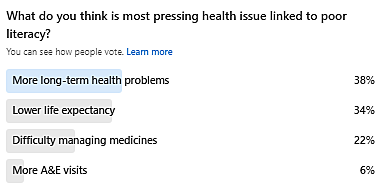
We wanted to understand how people interpret the link between literacy and health by asking our LinkedIn audience. With 38% of respondents choosing “more long term health problems” and 34% selecting “lower life expectancy’, as the most pressing health issues related to literacy, it’s clear that many recognise just how far the impact of poor literacy stretches beyond the classroom.
The responses reinforce exactly why literacy is such a vital public health issue. When people can’t access or act on basic health information, every part of life becomes harder – and the effects accumulate over time.
What our reading volunteers taught us about literacy
Volunteers from PWC shared the books that shaped them as children, reminding us how early reading experiences can echo across a lifetime. Watch their video here.
Across every step of the journey, one message rang true: reading for pleasure is one of the simplest, strongest and most effective ways to close the literacy gap. And it’s never too early, or too late, to begin.
Raising awareness through events and community activations
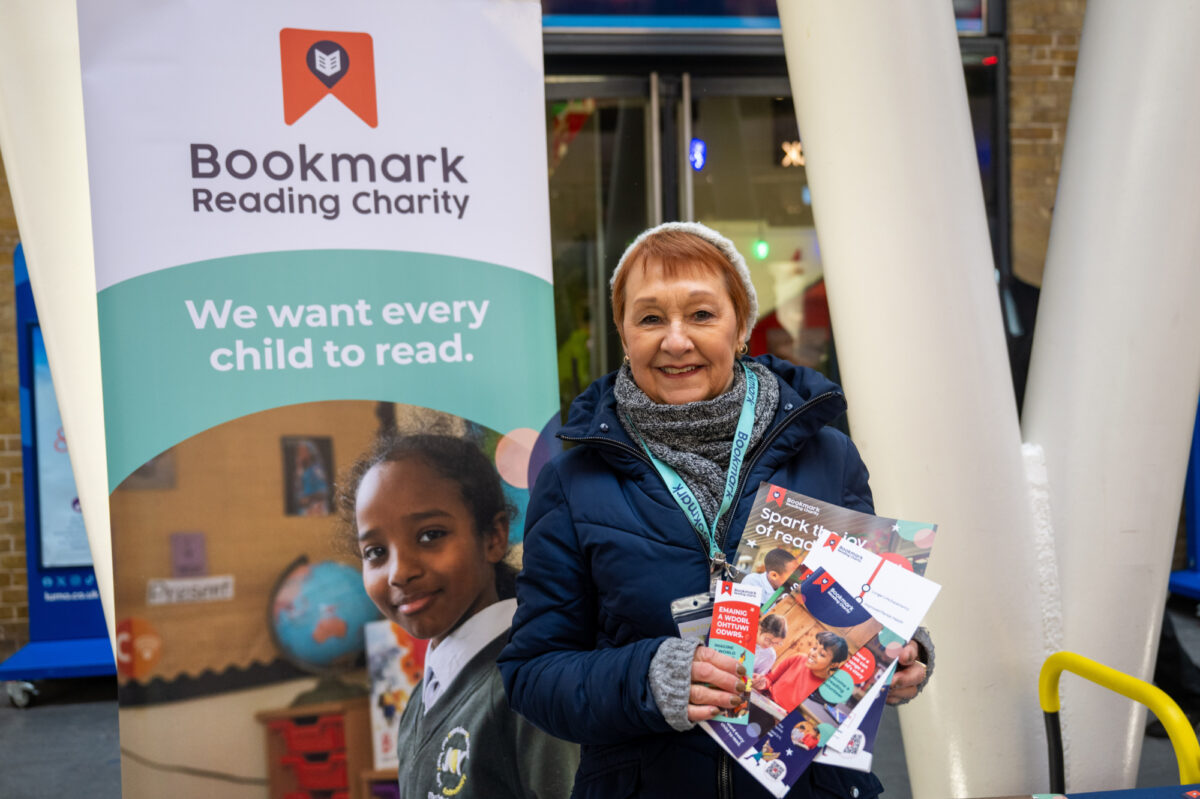
Volunteer activation at King’s Cross London
Volunteers and Community Ambassadors stationed themselves at King’s Cross to speak directly with the public, handing out resources and raising awareness about the pressing issue of children’s illiteracy in the UK. Every conversation helped build momentum towards a future with fewer children left behind.
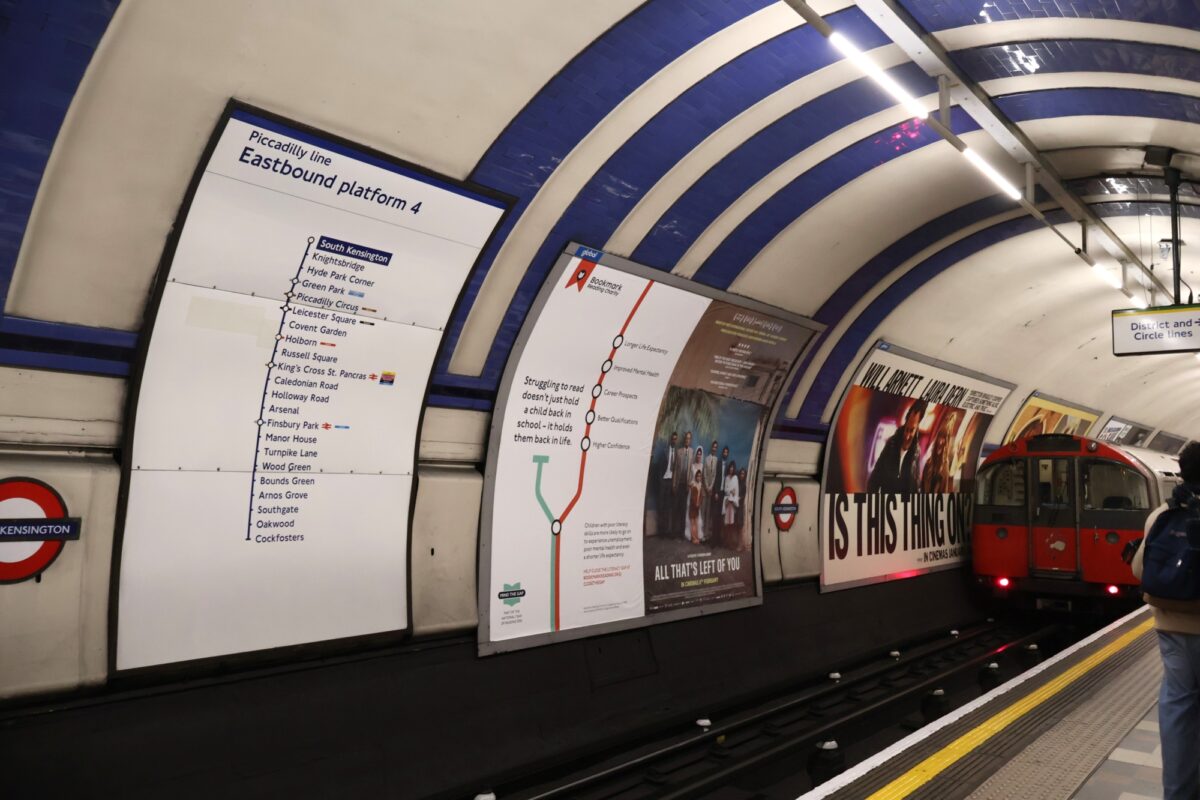
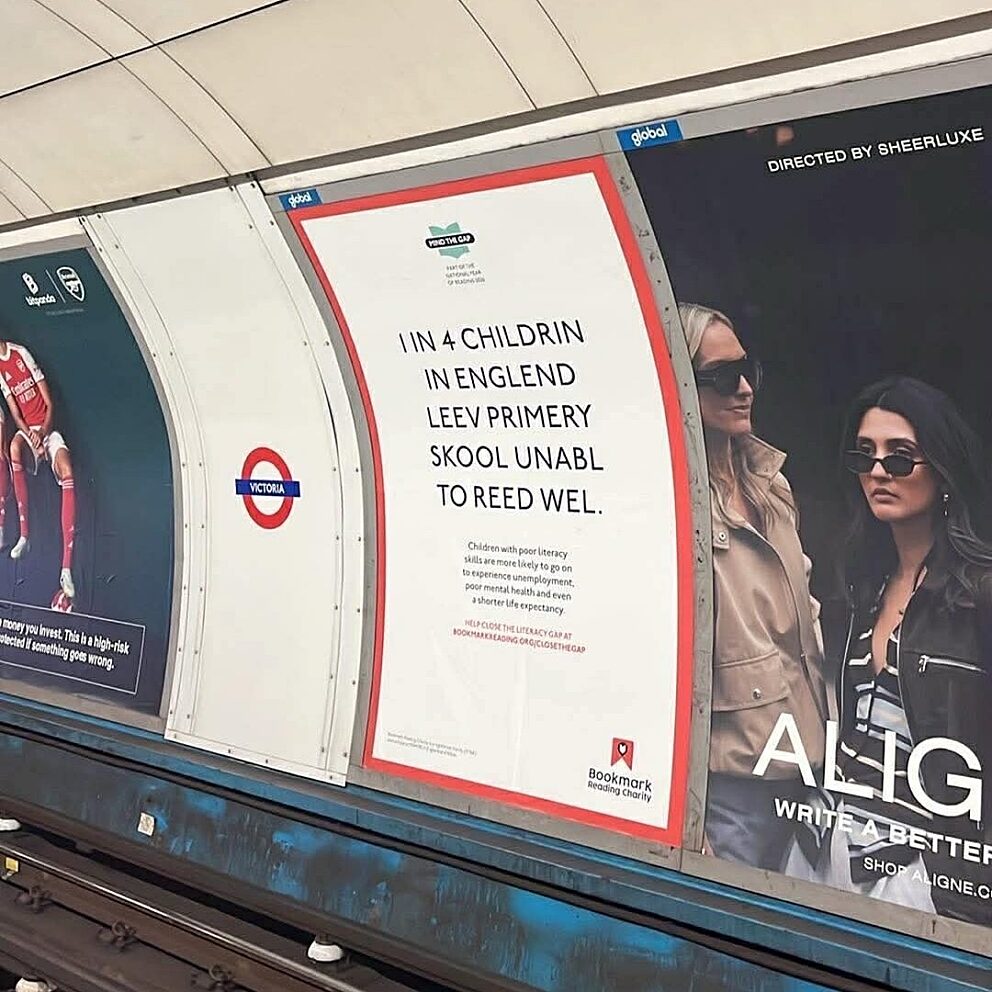
London Underground campaign advertising
Our tube ads appeared across major stations – turning heads and sparking important conversations about the literacy gap. These bold creatives encouraged Londoners to pause and reflect on the hidden reality of low literacy. Did you spot our tube adverts?
Mind the Gap Campaign: Frequently Asked Questions
-
The Mind the Gap campaign is a literacy campaign aimed at raising awareness of the literacy gap in the UK and inspiring action through events, community engagement and volunteer support.
-
Through social media life‑stage journeys, a panel event, public activations like Tube adverts and a stand at Kings Cross station, and World Book Day celebrations.
-
We continue to work with schools, volunteers and communities to run reading programmes, develop resources, and inspire children to read for pleasure.
Can't find what you're looking for? Try our Help Centre

Help close the literacy gap
The National Year of Reading 2026 is our moment to change the story for thousands of children falling behind. Become a reading volunteer and help a child build confidence, discover the joy of reading and close the gap before it widens.


- Gov.UK, Key Stage 2 attainment Academic Year 2024/25.
- GL Assessment. New study highlights the importance of reading to the whole school curriculum.
- National Literacy Trust. COVID‑19 and literacy: The attainment gap and learning loss.
- National Literacy Trust. Adult Literacy Rates in the UK. Schoolreaders. Tackling the UK’s childhood literacy problem with reading support.
- Pro Bono Economics. Poor literacy skills cost workers 18 months in lost earnings.
- Adult Literacy Trust (UK) – Parental literacy strongly predicts child literacy
The Impact of Illiteracy.
