Olaf Falafel on graphic novels, creativity and inspiring a love of reading
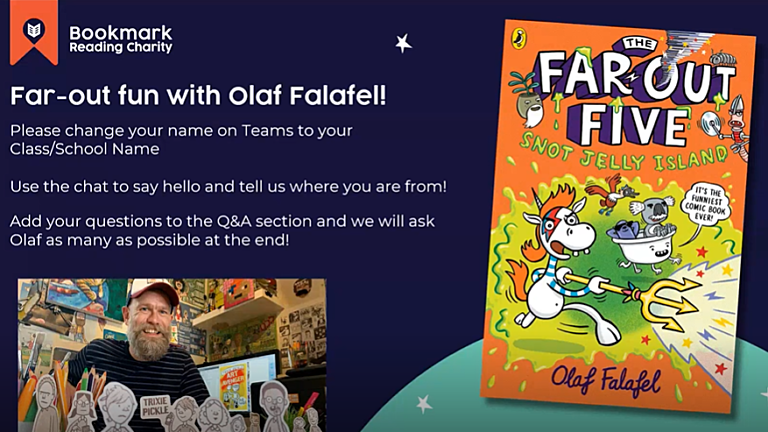
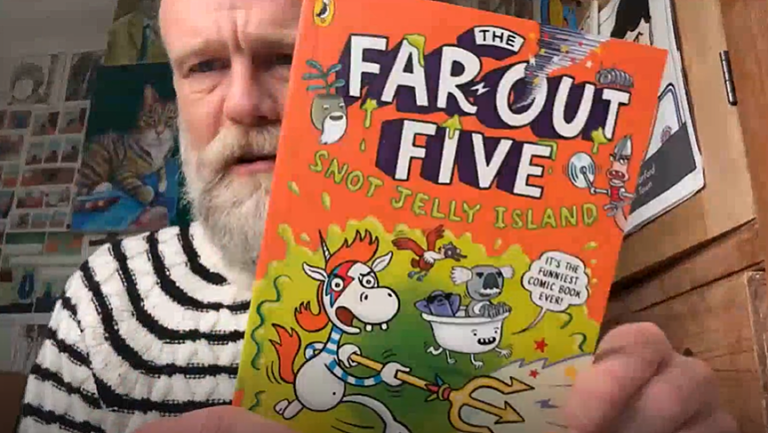
We recently hosted a special online event with author, illustrator and comedian Olaf Falafel to celebrate the launch of his new book, The Far Out Five.
The interactive workshop brought together over 2,500 children from 108 school classes, creating a lively virtual audience of young readers from across the country. The session was full of creativity and laughter, including a live drawing activity where children learned how to draw Spoonicorn – a character from the new book.
Reflecting on the experience, Olaf said it was “really good fun… to show off my book, which has just come out, to so many children at once.”
To mark the launch of The Far Out Five, we spoke to Olaf about his journey into children’s books, why graphic novels are so powerful for young readers, and how families can inspire a lifelong love of reading.
Olaf Falafel’s new graphic novel: The Far Out Five
The Far Out Five marks an exciting milestone for Olaf Falafel, as his first graphic novel for children. While he has previously written picture books and chapter books, this format allowed him to lean fully into the comic-style storytelling he loved growing up.
“When I was a kid, I was hugely into The Beano,” Olaf explained. “I used to get it delivered every week.”
With colourful panels, humour and adventure, The Far Out Five brings together Olaf’s background in illustration and comedy, making for a visually engaging and fast-paced story.
The book is also the first in a planned three-book series, with the second already completed and the third currently in development.
Who is Olaf Falafel?
Before becoming a bestselling children’s author, Olaf Falafel built his creative career through illustration and stand-up comedy.
He began working as an illustrator on magazines, advertising and design projects before moving into stand-up comedy, which he has been performing for nearly 15 years. Over time, he started performing family-friendly shows and realised how much he enjoyed making younger audiences laugh.
His own children also helped inspire his move into writing children’s books. As his daughters grew up, Olaf realised the humour he used in his comedy could translate perfectly into stories for young readers.
“I’ve got my own two children who I make laugh. I make other people’s children laugh, so I should make a funny book,” he thought.
His first picture book, Old MacDonald Heard a Fart, launched his journey as a children’s author. Since then, he has written several popular titles, including the Trixie Pickle Art Avenger series.
How Olaf Falafel creates a graphic novel
Creating a graphic novel is a detailed and time-intensive process that combines both writing and illustration.
For Olaf, it begins with an idea and a script. After the first draft is complete, his editor reviews it and suggests changes - “almost like a teacher marking it,” he explained – helping refine jokes, scenes and characters.
Next comes planning the visual layout. Olaf maps out how the story will unfold across panels and pages before creating pencil drawings for the entire book. Once these illustrations are approved, he produces the final coloured artwork.
Because graphic novels involve both storytelling and artwork, the process can take close to a year. Olaf often works on multiple books at once, developing new ideas while illustrating current projects – joking that “it can really melt your brain!”
Why reading for pleasure matters for children
For Olaf, encouraging children to read for pleasure is incredibly important.
“The more you read, the more educated you become,” he said. “It shapes your empathy with other people.”
Reading helps children explore new ideas, understand different perspectives and develop curiosity about the world. Olaf believes one of the best ways to build lifelong reading habits is to let children explore books that genuinely interest them.
“If we have kids picking things up and learning about things they’re interested in, it’s going to make for a far better society.”

How to encourage children to read more
Olaf’s advice for families looking to inspire reading is simple: start small and stay encouraging.
When his daughters were younger, he and his partner tried to read with them each evening, even if it was only for a few minutes.
“It could be five minutes, a picture book, even just one page of a chapter book,” he said.
Importantly, reading doesn’t have to mean traditional storybooks. Comics, magazines and graphic novels can all play a valuable role in building confidence and enjoyment in reading. They:
- Boost reading motivation
- Develop visual literacy
- Build confidence in struggling readers
- Encourage discussion around the story and the drawings
- Help to develop a genuine love of reading
“If it’s a comic, online, a graphic novel, whatever it happens to be – just be really encouraging and always show interest.’

Inspiring a love of reading through school events
For Olaf, visiting schools and meeting young readers is one of the most rewarding parts of being an author.
“I often get asked what my favourite part of being an author is,” he said. “For me it’s getting into schools and getting in front of kids.”
That’s one of the reasons he was keen to collaborate with us to host this event, as we focus our work on children in disadvantaged communities who may not always have access to books or reading support.
“I really like the way Bookmark goes into schools that need a bit of extra help and gives that one-to-one reading help,” he said. “I just thought doing an event with you guys would be fantastic.”
Events like this workshop show how creativity, humour and storytelling can inspire children to read. Whether it’s a graphic novel, comic or bedtime story, what matters most is helping children discover reading in a way that works for them – and spark a love of stories that can last a lifetime.

Help close the literacy gap
The National Year of Reading 2026 is our moment to change the story for thousands of children falling behind. Become a reading volunteer and help a child build confidence, discover the joy of reading and close the gap before it widens.


