Why literacy matters in a digital world for children and young people
“Technology has changed the way we engage with information and with knowledge”.
Today, children are growing up in a world where information is available at their fingertips. From social media to gaming platforms to streaming services, digital technology shapes how young people learn, communicate, explore interests and form opinions.
This International Literacy Day, it’s important to recognise that literacy is about far more than reading words on a page. In today’s digital world, literacy helps children to understand, question and engage with the information they encounter everyday online.
To explore this topic, we spoke to Dr Cristina Costa, Professor at Durham University, whose research focuses on the digital lives of young people.
Throughout our conversation, Dr Costa stressed a simple but powerful message: technology is now woven into children’s lives, and literacy is what enables them to navigate it safely, critically and confidently.
How technology is shaping children’s lives
Children are learning everywhere. Children and young people move between a range of digital spaces everyday, like social media, immersive gaming platforms and educational and creative tools. These spaces influence how they access information, develop interests and understand the world around them.
According to recent data (2026) from Ofcom, parents reported that: 65% of infants and toddlers (aged 6 months to 2 years), 88% of children aged 3 – 7 and almost all (99%) children aged 8 – 17 go online – playing games, connecting with their peers, or watching TV, videos, cartoons or music videos. This shows that more children are online than ever before; using these digital spaces for entertainment or learning.

The challenges with digital technology
Technology has undoubtedly expanded opportunities for young people. It gives them access to ideas, cultures and communities that they may not have known about before. It can connect them with educational content, support creativity and help them discover new passions.
But digital spaces also come with challenges.
Algorithms can funnel users towards viewpoints; influencers can shape aspirations, identities and beliefs; and misinformation can spread quickly.
That’s why literacy is more important than ever. Dr Costa explains, “you can expand your knowledge by accessing content that is reliable online, but there’s a skill that needs to be learned that comes from literacy, around what is reliable knowledge and information, and what is not.”
For children and young people, distinguishing between trustworthy information and misleading content is becoming an increasingly important life skill.
Digital literacy is the ability to understand, evaluate and use information online safely and effectively. For children and young people, digital literacy includes critical thinking, recognising misinformation, evaluating sources and making informed decisions about the content they consume and share.
Why literacy is essential in the digital age
Dr Costa describes literacy as “foundational because we are in a knowledge age”.
While literacy has always been essential, its role has evolved alongside technology. Today, literacy is not only about reading and writing; it’s about understanding information, evaluating sources, recognising bias and thinking critically about the messages we consume.
Children encounter countless messages online every day. Whilst some are educational and empowering, others are designed to persuade, entertain or sell. Without strong literacy skills, it becomes much harder to identify reliable information, question misleading narratives or understand why certain content appears in their feeds.
As Dr Costa explains: ‘reading the digital world is also about being able to distinguish between reliable information and misinformation.’
This is why literacy and critical thinking are so closely linked.
How literacy helps children navigate online spaces safely
When children develop strong literacy skills, they are better equipped to:
- Evaluate the credibility of information
- Recognise misinformation and manipulation
- Understand different perspectives
- Question what they see online
- Participate in discussions thoughtfully and respectfully
- Make informed decisions about the content they consume and share
Rather than becoming passive consumers of information, literacy empowers young people to become active and engaged participants in digital spaces.

Reading for pleasure and digital literacy
Reading for pleasure remains one of the most powerful ways to build literacy. Children who grow up seeing reading as an exciting part of everyday life are more likely to develop positive reading habits themselves.
Not only does reading for pleasure help children build and expand their vocabulary, but it also helps them think critically and interpret different perspectives. These are the very skills that help young people make sense of the content they see online.
For example, the same critical thinking skills that help a child understand the motivations of a character in a story, can help them recognise misleading information or understand why a particular message has been placed in front of them.
The role of families, schools and communities
According to Dr Costa, helping children navigate digital spaces cannot be left to schools alone.
Instead, she describes it as a ‘collective effort” across families, schools, communities and policyholders – they all have a role to play in nurturing literacy and critical thinking from an early age.
Families can model healthy digital behaviours, encouraging children to think critically about what they see online and to use technology in purposeful ways. Dr Costa said: “if parents have healthier habits online, then that young person is going to be mimicking a bit more of that”.
Schools play an equally important role. Beyond teaching children how to use technology, schools can help them understand it; exploring how information is created, shared and amplified online.
By working together, families, educators and communities can help children develop the literacy skills they need to make sense of the world around them.
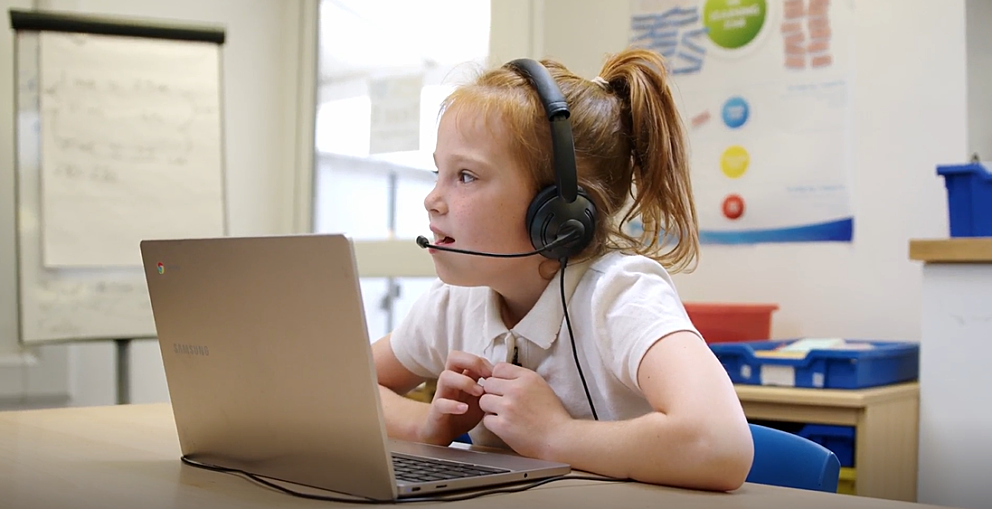
How Bookmark helps children develop literacy skills for life
Undoubtably technology will continue to evolve. New platforms and forms of communication will emerge and bring opportunities and challenges.
That’s why equipping children with the skills they need to navigate it successfully, is essential.
At Bookmark, our work is rooted in the idea that when children develop strong literacy skills and discover a love of reading, they gain more than the ability to read – they gain confidence, curiosity and the ability to make sense of the world around them.
In today’s digital world, those skills are more important than ever.
As Dr Costa puts it: ‘we’re living in a knowledge society and without literacy we cannot thrive.’
That’s why, this International Literacy Day, we’re celebrating literacy not just as a route to academic success, but as a vital tool for digital empowerment, helping every child develop the confidence and critical thinking skills they need to navigate the world, both online and offline.

Find out more about our programmes
We partner with schools to develop a whole-school reading culture and provide one-to-one reading support.


